
This post may contain affiliate links, which means if you enroll through my link, I’ll receive a small commission at no extra cost to you.
When the Affordable Care Act (ACA) first passed, it included the individual mandate — a federal requirement that most Americans maintain qualifying health insurance or pay a tax penalty.
The goal was to keep premiums stable by ensuring enough healthy people were enrolled to balance the costs of those needing more care.
But in 2019, the federal penalty was reduced to $0, effectively ending the mandate nationwide.
Even so, several states — and the District of Columbia — have created their own individual mandates with penalties for those who remain uninsured.
If you live in one of these states, knowing your requirements is essential to avoid costly fines.
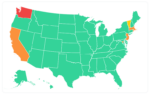
Below, you’ll find our interactive map showing which states have health insurance mandates, whether penalties apply, and where exemptions may be available.
Quick Takeaways
- Mandate + penalty: California, Massachusetts, New Jersey, Rhode Island, and the District of Columbia.
- Mandate, no penalty: Vermont (requires reporting but no financial penalty).
- No mandate: All other states.
- Penalty amounts vary by location and may be based on income, household size, and time without coverage.
- Many states offer exemptions for affordability, hardship, religious beliefs, or short gaps in coverage.
Interactive Map: State Mandates, Penalties, and Exemptions
50‑State Health Insurance Mandates, Penalties & Exemptions (Interactive)
State-by-State Details
Below is an overview of the states and DC that currently require residents to maintain qualifying health insurance. Penalty amounts are for the 2024 tax year unless otherwise noted.
1. California
- Status: Mandate + penalty
- Penalty: Greater of $900 per adult / $450 per child or 2.5% of household income above the state filing threshold.
- Exemptions: Affordability, hardship, religious conscience, certain short coverage gaps.
- Official resource: California Franchise Tax Board
2. District of Columbia
- Status: Mandate + penalty
- Penalty: Greater of $745 per adult / $372.50 per child or 2.5% of household income above the district filing threshold.
- Exemptions: Affordability, hardship, religious beliefs, short coverage gaps.
- Official resource: DC Health Link
3. Massachusetts
- Status: Mandate + penalty
- Penalty: Varies based on income, age, and family size. Cannot exceed half the cost of the lowest-priced ConnectorCare plan.
- Exemptions: Affordability, income under 150% of FPL, hardship.
- Official resource: Massachusetts Health Connector
4. New Jersey
- Status: Mandate + penalty
- Penalty: Based on income and household size; cannot exceed the cost of a bronze-level plan in the state marketplace.
- Exemptions: Affordability, hardship, short coverage gaps, religious conscience.
- Official resource: NJ Department of Banking & Insurance
5. Rhode Island
- Status: Mandate + penalty
- Penalty: Greater of $695 per adult / $347.50 per child or 2.5% of annual household income above the state filing threshold.
- Exemptions: Affordability, hardship, living abroad, short coverage gaps.
- Official resource: HealthSource RI
6. Vermont
- Status: Mandate, no penalty
- Penalty: None. Residents must report coverage status on state taxes.
- Exemptions: N/A (no penalty enforced).
- Official resource: Vermont Health Connect
Why States Keep Their Own Mandates
States with their own mandates say these laws help:
- Maintain a balanced insurance pool.
- Keep premiums from rising too quickly.
- Fund state healthcare initiatives, such as reinsurance programs.
How to Avoid State Penalties
If you live in a mandate state:
- Verify your plan is Minimum Essential Coverage (MEC) under your state’s definition.
- Check exemption rules if coverage isn’t affordable or you’ve had a qualifying hardship.
- Document your coverage or exemption — you may need proof when filing taxes.
Final Note
While most states no longer have an individual mandate, a few still enforce it — and the penalties can be substantial.
Use the map above to check your state’s requirements and make sure you’re in compliance before tax season.
This resource is for informational purposes only and does not constitute legal or tax advice. Always consult your state’s official resources or a qualified tax professional for guidance.
Health shares are not insurance and do not offer insurance coverage. Membership in a health share does not guarantee the payment or reimbursement of medical expenses. Each organization operates under its own membership guidelines, which determine what expenses may be eligible for sharing. This publication is for informational purposes only and is not provided by an insurance company. For state-specific notices and full program details, please visit the respective health share’s official website.


Leave a Reply